



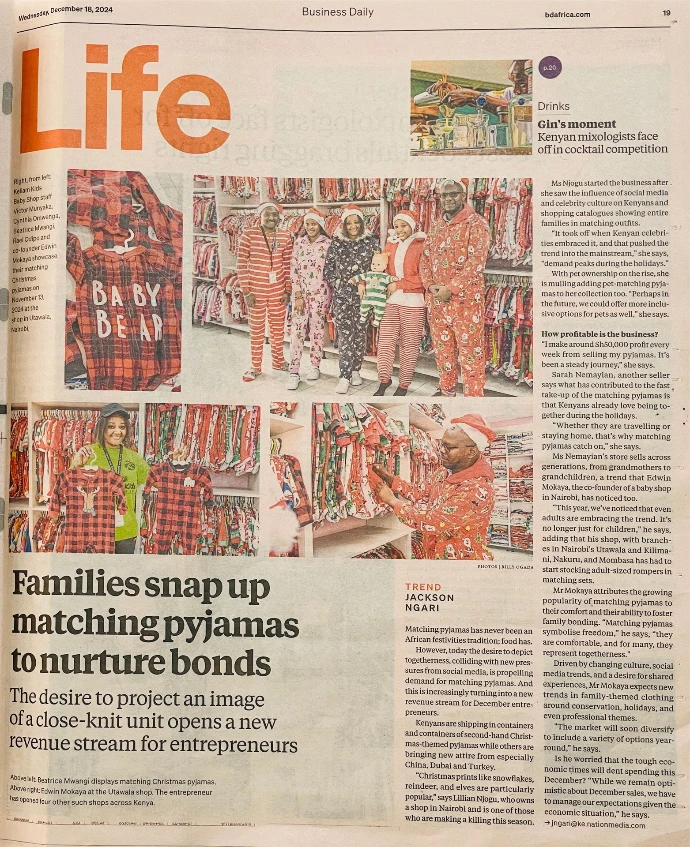


KKB, We are You
1. First, our customers enjoy unparalleled customer support. All our KKB products have extensive product lifecycle customer support. Further, local manufacture allows us to implement real-time customer feedback directly into our production lines. Ultimately, our customers enjoy world class products with a local touch.
2. Second, local manufacture drives sustainable community empowerment. The designers, tailors, carpenters, painters and support teams we engage in our production line all gain invaluable technical experience that would otherwise be exported to other markets. We deeply believe that even when other markets have superior competitive advantages, we in developing countries should still have our small chance to catch up.
3. Third, local manufacture guarantees exceptional product value. At the exact same price point, we offer better value for money. This is because we select premium raw materials, we employ a highly skilled human resource, and our quality assurance is world class.
When you buy a product bearing the KKB tag, you are investing in a sustainable future for our local industry.
5 Must Pick Items During Your First Newborn Baby Shopping
First of all Congratulations, from Keliam Kids Babyshop. We are excited for you, and we exist because of you! Wewe ni bingwa, shujaa na hongera!

Now, there are a thousand items to buy for your newborn. Which one is number 1? Which one is number 2? Which one is number 3?
If you can only buy 5 things, these are the 5 things to start with.
1. Receiving set. This is the most important of all important things to buy. When your child comes into the world, this is the clothing that they will wear. The nurse asks for nguo za mtoto. This is what they mean. If you are sure of the gender of the child, you can buy gender colors, blue, pink. If you are not yet sure of the gender of the child, kindly go with gender neutral colors grey, green, brown, yellow. Have the receiving set ready. And especially towards the end of the third trimester, the receiving set must be inside the hospital bag, and the hospital bag must be within walking distance of the mother to be.
2. Receiving blanket. Newborns are called a bundle of joy for a reason. They need to be bundled up with something warm, cozy and joyful. You need to buy them a baby blanket. At least one to start with. Two is good. Three is ideal, so that when one is being washed, the other can be used, and the third can be on standby.
3. Onesis. Ýou can call them onneesis, one-sis, one piece. And you can’t buy enough of them. They are important because the child needs to wear diapers, so the onesis holds the diapers in place. I will be honest, I never used to know what ones were, but now I know, and so do you. Start with 5 pieces.
4. Rompers. This is like the githeri of clothes for babies. One clothing that has both top and bottom. Like an overall, but softer. They can sleep in it, wake up in it, go to functions in it. My formular here is buy a few in the current age of the child, and a few more in the next age, and then a few more in a much bigger size. Those guys grow. Remember an adult is usually one size for a few years, most of the time. But a baby shoots through them sizes from month to month, sometimes week to week.
5. Bathing items. Basins, buckets, soap, bathing towel, baby soft towel, a towel for the towel, bathing ducks, bath support. Bathing items are all grouped together, because they are many small things needed at the same time. The rule to remember here is simple, even if you are clueless, very simple, newborns cannot shower using the same things you shower with, and they cannot stand, and they are very delicate.
The above list can form your agenda for your first day shopping. Please note that this list is in no way conclusive. Still , it is a good place to start. And most important, mums-to-be and dads-to-be, aunties/uncles-to-be, even grannies-to-be, remember to breathe!
On Color
Does color really matter?
Yes, trust us, because from experience, the same exact item but in different colors will have different outcomes. Be it toys, furniture, clothes, and everything in between. Color is not just a decoration, it is a decision.
A red toy car and a blue toy car are the same object, yet they will be chosen, loved, and remembered differently. Color shapes perception, mood, behavior, and memory in ways we often feel before we can explain.
But what is color, like really, what is color? And are there too many colors to count? And even if we could count them all, are they too many to remember? And finally, what are the first principles of this phenomenon called color? The answer begins with first principles — the three landmark discoveries that changed how humanity sees the world.
The first serious discovery was by Sir Isaac Newton, in the 1670’s, discovered that when white light passes through a prism, it is separated into a rainbow. And when the rainbow was passed through a second prism, it recombined back into white light. So, he pointed out that white light is made up of the ROYGBIV spectrum-Red, Orange, Yellow, Green, Blue, Indigo and Violet light. This was a revolutionary insight: white light is not pure or empty, it is a mixture, of all colors.
The second milestone is the practical realization of artists that we can use red, yellow and blue color pigments in different proportions to come up with all other colors. These became known as the primary colors: the foundation of all color mixing in the physical world.
Mix yellow and blue and you get green. Mix red and blue and you get purple. The primary colors cannot themselves be produced by mixing other pigments — they must be made independently, which is precisely what makes them primary.
This framework, known as the RYB color model, became the bedrock of art education for centuries and remains deeply intuitive. It is how painters build a palette, how textile artists develop a dye range, and how children first learn to understand color relationships. It is also the reason why choosing the right base colors matters so much — whether you are decorating a nursery, selecting a wardrobe, or curating a collection of toys. Every color relationship a child encounters begins with these foundational three.
The third major milestone is when science revealed that the human eye contains three types of color receptors — sensitive to red, green, and blue wavelengths. Our entire perception of color is built from the signals these three receptors send to the brain. Every color you have ever seen, from the most vivid primary color, to the softest pastel, is a combination of these three signals working in concert. This is why color is not a surface detail. It is wired into us at the level of biology, which explains why children respond to it so instinctively and so powerfully — long before they have the words to say why.
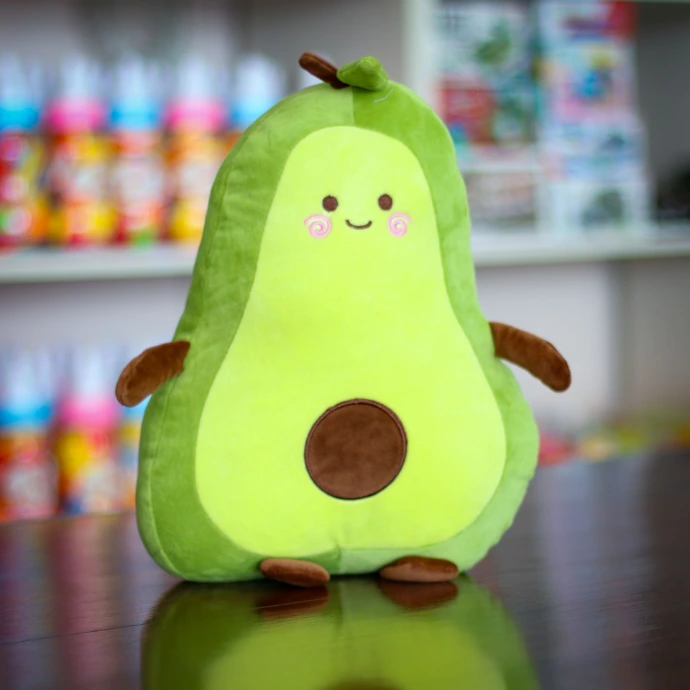
At Keliam Kids, these are some of the things which fascinate us. To us, color is not an afterthought — it is the very soul of what we do. We spare no effort to bring you a vast collection of toys, clothing, and furniture that honors every hue, every preference, and every personality. Because the right color at the right moment is more than beautiful, it is memorable.
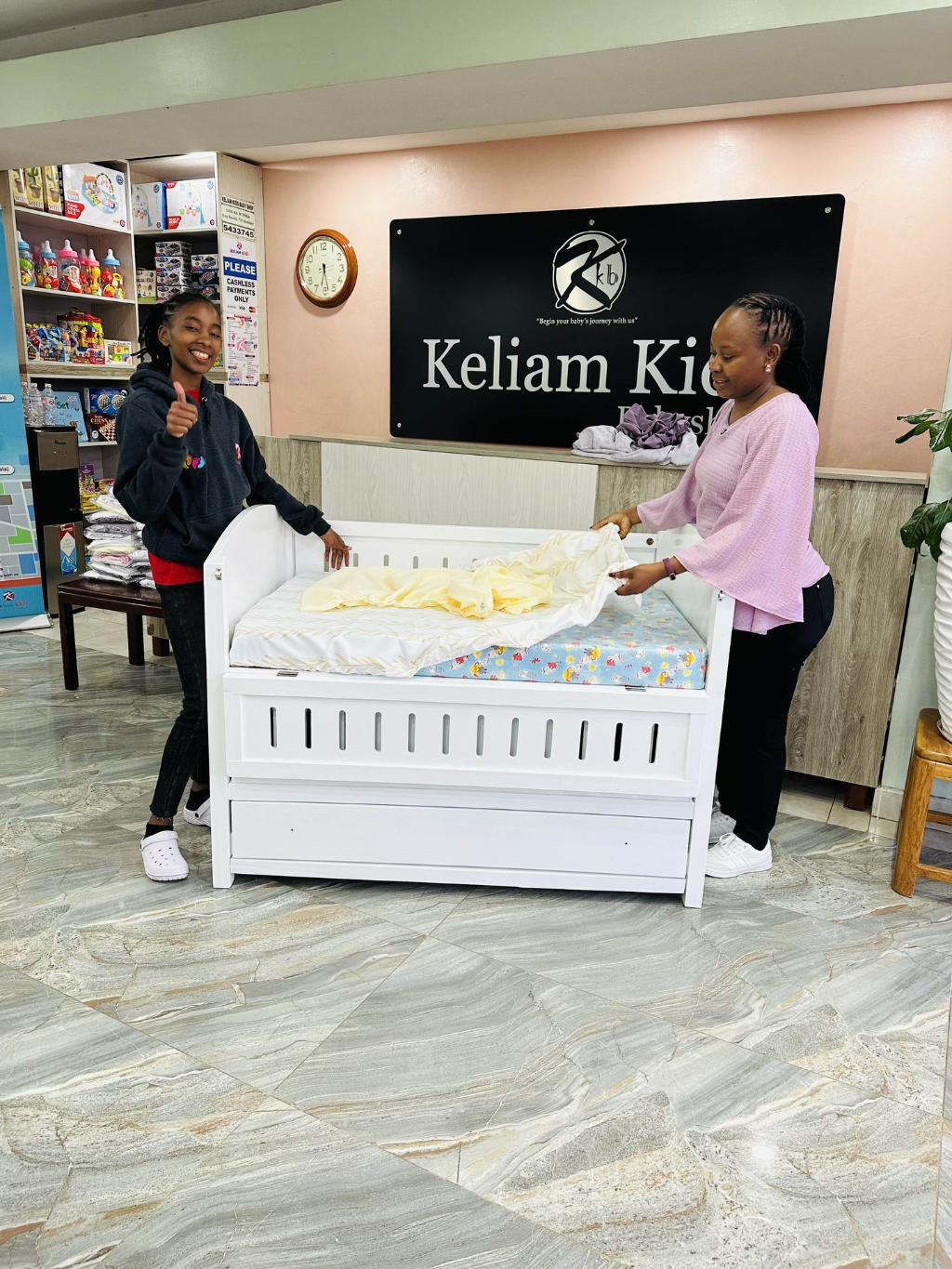
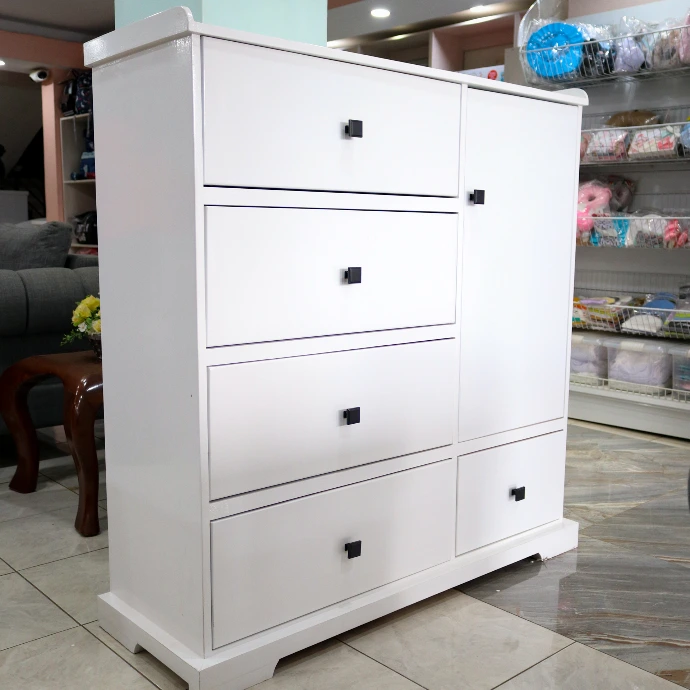
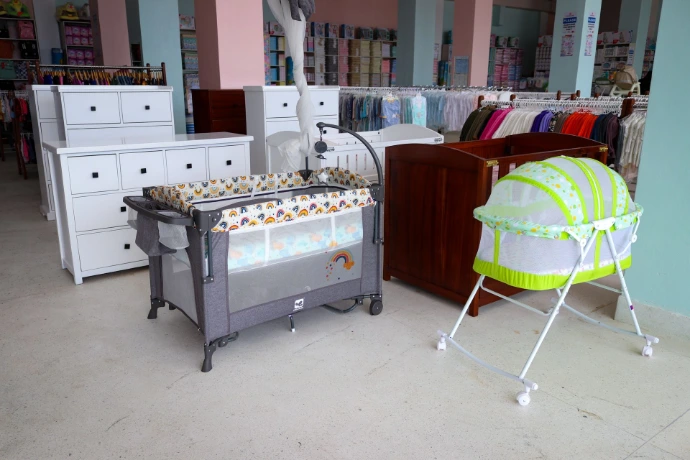
And yes — we can absolutely match your child's baby cot or chest of drawers to your favorite color. At no extra cost.
On Starting a Business
Over the years, family, friends and clients have pulled us aside with the same question: how do I start a business? This is my answer.
There are many ways to skin a cat. But if you want to become a professional cat skinner, your first assignment is to figure out which way works for you. And so the answer, frustratingly, has to come from the person staring back at you in the mirror each morning. Still, here are my two cents worth of advice.
Starting a business and growing a business are two different things. The goal of starting a business has to be to survive, because the shocks will come fast and hard. The goal of growing a business, on the other hand, could be anything from making money to changing lives.
The first major principle is that you have to decide.
It would be good if you have an idea of which business you want to start, but trust me, this is neither necessary, nor does it have any bearing on your success or failure. Some people are born on the hill. Others are born in the valley. What matters is that you have arrived.
The engine of business is decisions.
Deciding to become a businessperson is just that, a decision. And if you procrastinate on this one, imagine how overwhelmed you will be by the countless decisions that will bombard you once you are inside the game.
The best time to decide was ten years ago. If you are 18 years old, that pushes the timeline to when you were in lower primary.
The next best time to have made that decision is yesterday.
The final okay time to make that decision is today.
Anyone who will decide to start a business tomorrow, or next week, or next year, is already losing. And that is how brutal business is — it can push you into losses even before you start.
The second principle is to start with what you have, where you are.
Richard Branson says he started Virgin Atlantic with no aeroplane. He chartered a plane, filled it with passengers, and figured out the rest later. At the starting stage, you do not need external funding or capital. You have to crack your head to figure out how to commercialise that which is already within your reach. The genius is not in the resources. It is in the resourcefulness.
The third principle is three in one.
You must believe in Newton's third law of motion, that for every action there is an equal and opposite reaction. You must respect Einstein's E=mc², which tells us that energy and mass are the same thing in different forms, and that nothing in the universe is created from nothing. And you must accept that the speed of light is a constant. There are hard limits to how fast things can move. And the universe does not make exceptions.
These are not just physics. They are business.
Some people start businesses that conflict with the law of action and reaction. They make moves and then get surprised by what comes back to them. The reaction always comes.
Some people start businesses whose entire premise is the creation of something from nothing — no real product, no real value, no real service. Just thin air dressed up in a suit.
Some people want to move faster than the speed of light. But everything has a hard-coded limit. Learn the limits, decide your safety margins, implement, learn, and iterate.
All three categories of people are stacked against the universe.
Start with a decision. Start with what you have. And start with your eyes open to how the world actually works. Do that, and you are already ahead of most people.